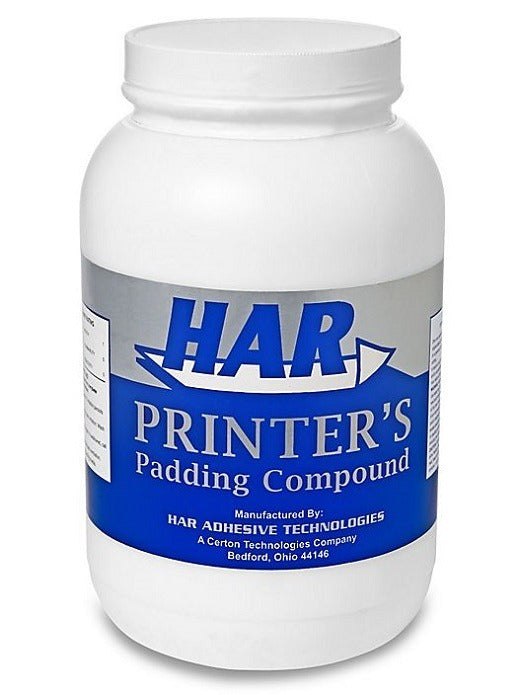
Padding glue, also sold as padding compound or padding adhesive, binds a stack of loose sheets along one side so every page tears off cleanly. Print shops use it for making notepads, memo pads, scratch pads, receipt and coupon books, tear-off calendars, and padded forms. Offices and schools use the same compound for making note pads in house, and for DIY notepads made from scrap paper and a few binder clips.
HAR's resin is also formulated for general binding, including light book binding and repair work where a flexible spine beats a rigid one. School glue such as Elmer's glue dries hard and stiff, which is fine for a one-off project but makes pages rip instead of tearing away at the top edge. For pads you'll sell or hand to customers, a dedicated padding compound is the right choice.
It's made for any common paper type: bond, text stock, cardstock, and chipboard backers. This product isn't an upholstery or foam adhesive, and it isn't the adhesive for carbonless sets, which we cover below.
How to Apply HAR Padding Compound
The padding process takes little hands-on time and about an hour of drying. Here's the routine most print shops follow when making pads.
Jog and Clamp the Stack
Jog the sheets until the top edge is flush and square. Drop a backer under each pad count (chipboard and cardstock are the usual options) so you can cut the stack apart later. Clamp the stack tight so the padding side feels like a solid brick, since air gaps let moisture warp the sheets and weaken the bond. Tight clamping is what gives each pad a square, even spine.
A ChamPADco 22 inch padding press holds a full lift square, which is the efficient setup for production work, and the ChamPADco 14 inch padding press suits smaller formats and occasional runs. Without a padding press, a weighted board at the edge of a table or a row of binder clips will hold a small stack.
Brush On the Coats
Load a padding brush and work a thin to medium coat across the exposed spine of the stack, brushing from the center out so compound doesn't run down the sides. Cover it end to end. One good coat does the bonding on most bond and text stock. On porous paper, cardstock, or a thick pad, add a second light coat once the first turns tacky. For DIY notepads, a common routine is three coats, 10 to 15 minutes apart.
Drying Time and Separating Pads
HAR padding compound is usually dry to the touch in 20 to 60 minutes, depending on coat weight, humidity, and room temperature. Give the last coat a full hour before you release the clamp. Then slide a pad knife between backers to cut the stack into individual pads. If you applied the right amount, sheets tear away clean, with no loose skin of glue left on the top edge. Test one pad before you cut the whole stack.
Making DIY Notepads
If you're making a quick batch of DIY notepads at home or in the shop, cut 8.5 by 11 inch paper into quarters, which gives you a standard notepad size of 4.25 by 5.5 inches. Twelve sheets cut that way make a 48-page pad, a comfortable pad thickness for a desk. Stack the quarters on a stiff backer, hold them with binder clips, brush three coats, and let the pad dry about an hour. Each pad needs its own backer if you're stacking several.
Homemade padding compound recipes need heating, and reheating each time you reuse them. HAR skips the heating step: you brush it on cold, straight from the jug. Paper, cardstock, and backer stock are in our printing paper supplies collection.
Gallon or Quart: Choose by Production Volume
One ounce of padding compound covers roughly 60 square inches of padding surface. That puts a quart at about 1,920 square inches and a gallon at about 7,680 square inches, which is enough to pad a stack of 8.5-inch sheets roughly 75 feet tall. Heavier application and porous stock use more, and both size options pad the same way.
A HAR quart fits offices, schools, and shops that pad a few jobs a month. Choose the gallon once padding is a regular part of the schedule. At that point, you refill a small working container from the jug instead of reordering mid-job, which saves time, and you keep enough on hand for making order forms, scratch pads, and promotional note pads in the same week. For a shop that runs pad work weekly, the gallon is the more efficient buy and keeps throughput steady.
Padding Glue vs. Fan-Apart Adhesive for Carbonless Sets
Padding glue and fan-apart adhesive look alike in the jug, but they're built for different jobs. Padding compound is a thick glue for making plain paper into a pad. Fan-apart adhesive is a thinner compound designed for carbonless paper, including NCR brand sheets. It reacts with the chemical coatings on carbonless stock, so it works more like an activator than a glue.
That difference shows up when you fan the stack. Collate the carbonless sets in order, apply fan-apart to the spine, and let it dry. The adhesive bonds where coated surfaces meet inside each set, but not between the uncoated back of one set and the uncoated face of the next, so the stack splits into finished sets instead of one solid pad. Standard padding compound bonds every sheet it touches, so it isn't for NCR or other carbonless forms. For those jobs, choose Universal Fan Apart adhesive instead.
Order this product by the gallon alongside the rest of our printing chemistry, padding supplies, and pressroom supplies, with free shipping to the contiguous 48 states. Questions about sizing a padding order, or want to learn which adhesive fits a job? Call 860-516-6393 or email info@printingsuppliesdirect.com.
By the Printing Supplies Direct Team.