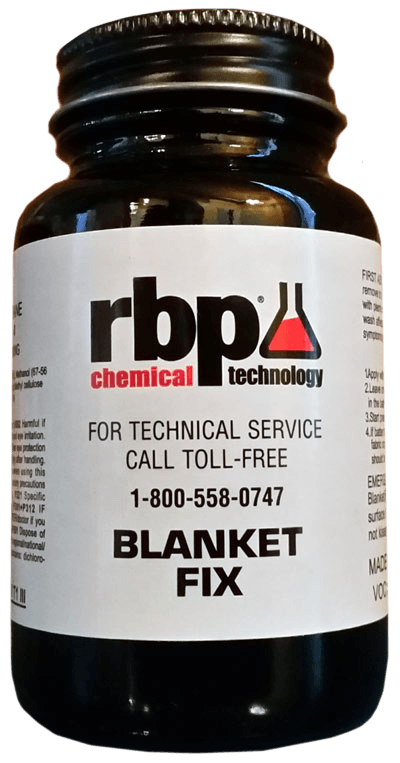
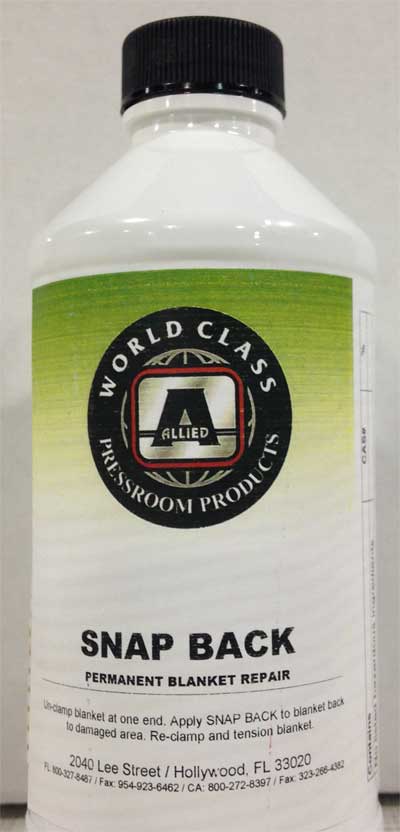
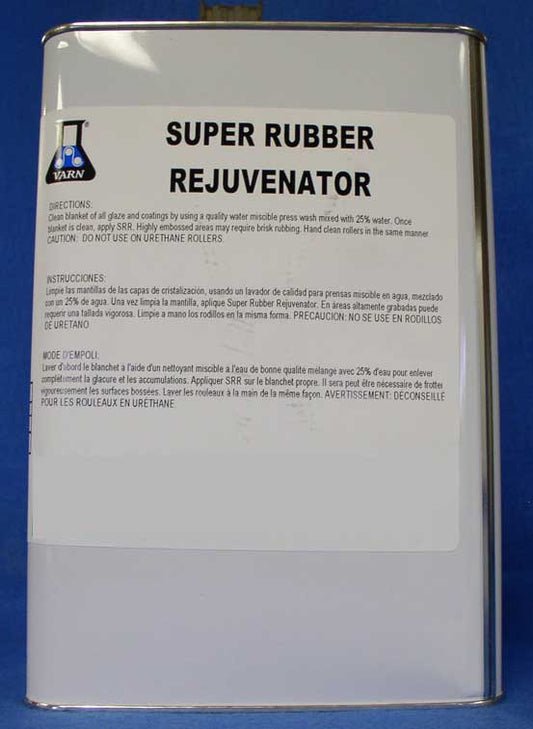
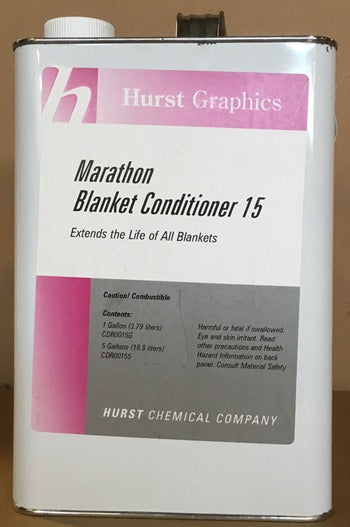
Conditioning the Rubber and Stopping Oxidation
Oxidation is the slow enemy of any press blanket. Oxygen attacks the rubber compound, plasticizers migrate out, and the surface hardens until it loses the compressibility that clean ink transfer depends on. An anti-oxidant blanket treatment works by restoring conditioning agents to the compound and forming a protective film that slows oxygen attack during idle periods.
The result is a blanket that stays pliable instead of glazing and going hard. Because cracking almost always begins at the edges, where flexing and solvent exposure concentrate, keeping the whole surface conditioned is what keeps small surface checks from becoming a failure that ends the blanket's working life.
When to Use a Blanket Saver
Timing is most of the value. Apply at the end of a shift after wash-up, when the blanket will sit idle for more than a few days, and after any heavy exposure to aggressive solvents that strip conditioning out of the rubber. Used on that schedule, an offset blanket conditioner keeps the surface from drying between runs.
One caution: a saver is not a fix for the wrong wash. If a harsh solvent is attacking your blankets in the first place, start by matching the right press washes to your ink and blanket, then condition afterward. The two work together rather than one covering for the other.
Pairing a Blanket Saver With a Full Maintenance Routine
Wash Up, Inspect, Condition, Store
A blanket lasts longest inside a consistent routine. Wash up with the right chemistry, then inspect for smashes, low spots, and edge checks before anything else. Pull clean-up sheets through to lift residual ink and lint so the surface is genuinely clean, not just wiped. Then condition.
Keeping roller deglazers and cleaners in the same routine matters too, because glazed rollers push more solvent and pressure onto the blanket than a clean train would. Finish by storing the blanket flat and protected. A few disciplined minutes at the end of a shift returns far more in blanket life and stable print quality.
Protecting Blankets Before Storage or Idle Time
Idle time is when blankets quietly degrade. A press parked for a long weekend, a seasonal slowdown, or a blanket pulled and shelved for a recurring job all invite oxidation while nothing is running. Used as a press blanket protector before those stretches, a saver leaves a conditioning film that helps prevent blanket cracking during the layoff.
The same discipline applies to dampening: a clean, properly mixed fountain on restart keeps the whole system stable, so review your fountain solutions when you bring a press back online. Condition before the idle period, not after the damage shows.
Why Offset Blankets Harden and Crack
An offset blanket is a layered composite: a compressible rubber face, usually a nitrile (NBR) compound, bonded to plies of fabric for dimensional stability and, in a compressible blanket, a foamed middle layer that absorbs impression shock. That face transfers ink from plate to sheet, and it works only while it stays soft and resilient. As it ages, its reading on the Shore A durometer scale, measured per ASTM D2240 or ISO 48-4, climbs, ink transfer falls off, and the surface glazes and eventually cracks at the edges where flexing concentrates.
The chemistry behind that aging is specific. Ozone attacks the carbon-to-carbon double bonds in the rubber's polymer chains, and nitrile rubber, a copolymer of butadiene and acrylonitrile, carries those double bonds in its butadiene units, which is why it is among the more ozone-sensitive elastomers, unlike the EPDM and neoprene compounds chosen where ozone resistance matters most.
Even ordinary air holds roughly 0.01 ppm of ozone, and the electric motors, static eliminators, and fluorescent lighting common to a pressroom push it higher, so cracking shows up first on the stressed, flexed face of a working blanket. Aggressive solvents add a second path, leaching out the oils and plasticizers that keep the compound supple.
A blanket saver works against both paths. Applied after wash-up, it replenishes surface oils and leaves a protective film that slows ozone and oxygen attack during idle time, holding the face closer to its original hardness and ink-transfer characteristics for longer. It cannot reverse cracking that has already started, which is why it belongs in the routine before damage shows.
- Protects against: oxidation and ozone hardening of the rubber face
- Protects against: solvent drying that strips plasticizers and oils
- Protects against: surface glazing that reduces ink transfer
- Protects against: edge cracking and premature blanket failure
When to Apply a Blanket Saver
Treat conditioning as part of the wash-up routine rather than a rescue step. The best time to protect a blanket is before it sits, not after the surface already looks rough.
- After the final wash-up at the end of a shift
- Before any idle period longer than a few days
- After heavy or aggressive solvent exposure
- Before a press goes into storage or a long layoff
Reading Blanket Wear: Symptoms, Causes, and Fixes
A blanket runs at a controlled squeeze, the slight overlap between the plate and blanket cylinders that transfers the image. Most sheetfed presses run around 0.004 to 0.006 inch, that is 4 to 6 mils, of total squeeze, set with packing under each cylinder; a common setup following GATF packing guidance puts the plate about 0.001 inch over bearer and the blanket about 0.004 inch over.
As a blanket oxidizes and hardens it loses thickness and compressibility, so that squeeze and the ink transfer that depends on it drifts off the set point. Conditioning protects the press setting, not only the blanket, which is why experienced operators treat it as routine maintenance rather than a rescue step.
Use the table below to read what a tiring blanket is telling you.
- Glazing, weak or patchy ink transfer: Caused by oxidation, surface hardening, ink and gum build-up. Clean, then condition; replace if transfer stays low.
- Edge cracking: Caused by oxidation plus flex fatigue at the cylinder gap. Condition routinely; replace once cracked.
- Low spots or smashing: Caused by mechanical impact, often a sheet jam or doubling. Replace; a saver cannot rebuild crushed rubber.
- Swelling or surface attack: Caused by solvent incompatibility with the blanket compound. Match the right press wash to the blanket, then condition.
Glazing Is Not the Same as Hardening
Operators often lump every stiff blanket together, but glazing and oxidation hardening are different problems with different fixes. A glaze is a build-up on the surface: ink binder, gum, and especially calcium carbonate carried off coated, alkaline paper, which crystallizes as the press sits and seals the pores until the face can no longer transfer ink.
Conventional blanket and roller washes do not lift a calcium glaze, and grocery-store acids such as vinegar or lime remover are a real risk to the rubber and to the rest of your press chemistry. A blanket saver is a conditioner, not a deglazer and not a wash, so match the product to the problem.
- Press wash: removes fresh ink and residue at the end of a run or color change
- Deglazer or calcium remover: lifts the crystallized calcium and binder glaze that ordinary washes leave behind
- Blanket saver or conditioner: replenishes oils and protects the clean surface from oxidation between runs
Storing Blankets to Slow Ozone Damage
Idle blankets degrade fastest where ozone collects, so storage matters as much as conditioning. Keep spares away from electric motors, battery chargers, and static eliminators, which all generate ozone, and out of direct sunlight and fluorescent light, since UV drives the same chain scission that ozone starts. Store blankets flat or loosely rolled in the interleaving they shipped in, in a cool, dark, dry spot, and condition the surface before any long layoff.
- Away from electric motors, chargers, and static eliminators that produce ozone
- Out of direct sunlight and fluorescent light, which add UV damage
- Flat or loosely rolled with interleaving, in a cool, dark, dry place
- Conditioned before any long idle period or storage
Sources and Technical Standards
The specifications on this page reflect recognized print-industry standards and the product knowledge we have built supplying US print shops since 2010. The references that inform the figures above:
- Rubber hardness: Shore A durometer, measured per ASTM D2240 and ISO 48-4
- Packing and squeeze: GATF (Graphic Arts Technical Foundation) packing guidance, with plate-to-blanket squeeze commonly 0.004 to 0.006 inch
- Material and aging: nitrile (NBR) blanket compounds and ozone or oxidation hardening, per offset blanket manufacturer technical data sheets
- Ozone aging: ozone attack on the carbon-carbon double bonds of unsaturated elastomers such as nitrile rubber, per published elastomer-degradation references
- Glazing: calcium carbonate and ink-binder build-up carried off coated alkaline paper, per pressroom chemistry guidance
- Reviewed by: the Printing Supplies Direct technical team
Why Buy Blanket Savers From Printing Supplies Direct
Printing Supplies Direct has backed pressrooms since 2010 with same or next-day shipping on most orders and free shipping to the contiguous 48 states. When a press is down, expedited overnight UPS gets the product to you fast, and every order is covered by our performance guarantee and real technical support.
For the rest of the chemistry that keeps blankets and rollers healthy, browse our full pressroom chemistry or call 860-516-6393 and we'll help you build a maintenance kit that fits your press.
Key Takeaways
- Offset blankets harden from oxidation, ozone, and solvent-stripped plasticizers.
- A blanket saver replaces surface oils and slows oxidation between runs.
- It is preventive maintenance, not a repair for an already-cracked blanket.
- Apply after wash-up, before idle time, and before storage.
Frequently Asked Questions


 Sold out
 Sold out