How a Deletion Pen Works
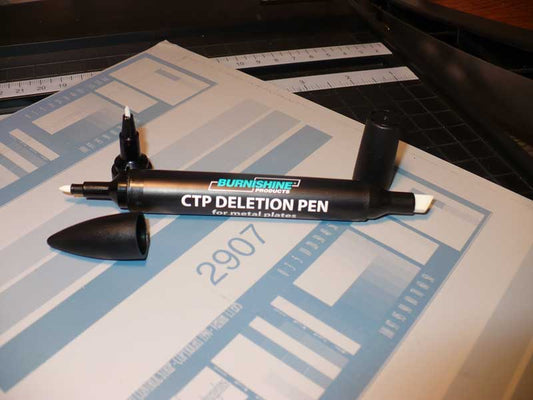
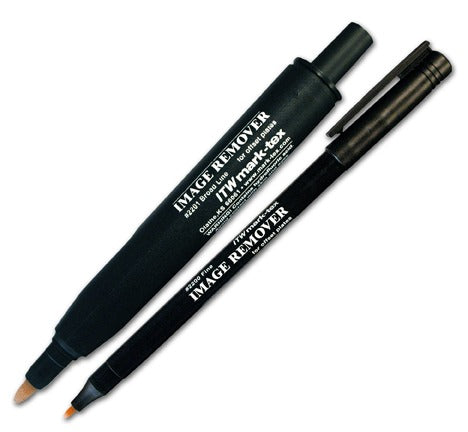
A deletion pen applies a chemical that desensitizes the treated area of the plate so it stops accepting ink. Touch it to a stray dot, a hickey-causing speck, or a guide mark, let it work, and that area runs clean on press.
The same active is sold as deletion fluid for larger touch-ups applied with a brush rather than a pen tip. Either form does the same job: it removes image without you having to strip the whole plate. Keep the tip clean and the cap on between uses so the chemistry stays active, and work on a flat, supported surface so the application stays precise.
How an Addition Pen Works
An addition pen does the opposite. It lays down a lacquer or ink-receptive compound that creates new image in a blank area, so a worn or missing element prints again. An addition pen offset plate correction is ideal for restoring a thin rule, a dropped serif, or a small element that didn't fully image.
As a plate pen for metal plates, it's formulated for the aluminum surfaces used in conventional offset work rather than polyester or coated digital plates. Apply sparingly, build up only what's needed, and let it dry fully before you judge the result, because a thin, even film holds far better on press than a heavy one.
When to Reach for a Plate Pen
Common Bench Corrections
Deletion handles stray marks, hickey-causing dots, small unwanted text, and leftover guide marks. Addition handles minor text corrections, restoring worn image areas, and touch-up after a plate has been in storage. An offset plate touch-up like this saves a remake when the plate is otherwise sound. Know the limit, though: pens are not the tool for large corrections or critical register work, where reworking the plate is the right call.
These pens are formulated for metal plates, so if you're running our PSD polyester laser plates, check the product guidance before treating a polyester surface, since the chemistry behaves differently there.
Plate Pen Tips for Clean Results
A few habits keep corrections reliable. Dry the correction fully before mounting, because a wet deletion or fresh addition can shift or lift under pressure on press. Test on a scrap area of plate first when you're using a new plate correction pen, so you know how it behaves before you touch the live image.
If the plate won't go on press right away, protect the correction with plate gum so it survives storage. Keep the bench tidy: a clean surface from our plate gums and cleaners shelf, good light, and a steady hand do more for a clean result than any single product.
Deletion Pen vs Addition Pen: When to Use Each
The two pens solve opposite problems, so most platemakers keep both within reach of the bench. Match the pen to the error in front of you.
- Reach for a deletion pen to remove stray marks, hickey-causing dots, guide marks, and small unwanted text
- Reach for an addition pen to restore a thin rule, a dropped serif, or a worn image element
- Use either for fast bench corrections that save stripping and remaking a sound plate
- Step up to a full remake for large corrections or anything on a critical register feature
How to Apply a Plate Pen
A deletion pen carries a desensitizing etch, typically a gum arabic and mild acid chemistry, that makes the treated aluminum hydrophilic so it holds dampening water and rejects ink, the same way the gummed non-image areas of the plate already behave. An addition pen does the reverse, laying down a lacquer or resin that bonds as an oleophilic image so a restored element inks like the original.
Both are formulated for conventional grained-and-anodized aluminum plates; thermal and photopolymer CTP coatings respond differently, so check the pen's stated compatibility before treating a CTP plate rather than assuming a metal-plate product behaves the same.
- Clean and dry the area so the chemistry bonds to bare plate, not ink or film
- Apply sparingly with the tip flat to the plate, building up only what the correction needs
- Let a deletion correction desensitize fully before wiping or gumming as the product directs
- Let an addition correction dry completely before judging it, since a thin film holds better than a heavy one
- Cap the pen between uses to keep the chemistry active
How the Two Pen Chemistries Compare
Conventional analog plates are exposed through film, while CTP plates are imaged directly, thermal CTP with an infrared laser near 830 nm and violet CTP near 405 nm. Those coatings can respond to correction chemistry differently from grained-and-anodized analog aluminum, and a plate that has been post-baked for run length will resist deletion fluid.
Therefore, make corrections before baking and use a CTP-rated product where the manufacturer calls for one. The two pen chemistries are mirror opposites, summarized below.
Deletion Pen
- What it does: Removes unwanted image
- Chemistry: Desensitizing gum-arabic etch; makes the spot hydrophilic
- Use it for: Stray marks, hickey dots, guide marks, small unwanted text
- On press: Treated area carries water and rejects ink
Addition Pen
- What it does: Restores missing image
- Chemistry: Lacquer or resin; makes the spot oleophilic
- Use it for: Thin rules, dropped serifs, worn or under-imaged elements
- On press: Treated area accepts ink like the original image
Sources and Technical Standards
The technical detail on this page reflects established prepress practice and plate-manufacturer guidance, alongside the product knowledge we have built supplying US print shops since 2010. The references that inform the points above:
- Plate surface: grained-and-anodized aluminum lithographic plates, with oleophilic image areas and hydrophilic non-image areas
- CTP imaging: thermal CTP at roughly 830 nm and violet CTP at roughly 405 nm, per plate-manufacturer technical guidance
- Corrections: deletion and addition fluids matched to plate type, with baked plates resisting deletion, per plate-manufacturer deletion-fluid guidance
- Reviewed by: the Printing Supplies Direct technical team
Why Buy Plate Pens From Printing Supplies Direct
Printing Supplies Direct has supplied pressrooms since 2010, with most orders shipping same or next day and free shipping to the contiguous 48 states. When a correction is holding up a run, expedited overnight UPS gets the pen to your bench fast, and every order carries our performance guarantee and real technical support from people who run presses.
For the chemistry that supports your platemaking and finishing, see our plate developers and finishers or call 860-516-6393 and we'll help you stock the bench.
Key Takeaways
- A deletion pen desensitizes a spot so it stops inking; an addition pen restores missing image.
- Both are bench tools for small, localized corrections on aluminum offset plates.
- A clean correction can save stripping and remaking an otherwise sound plate.
- Large corrections or critical register work call for a remake, not a pen.
Frequently Asked Questions