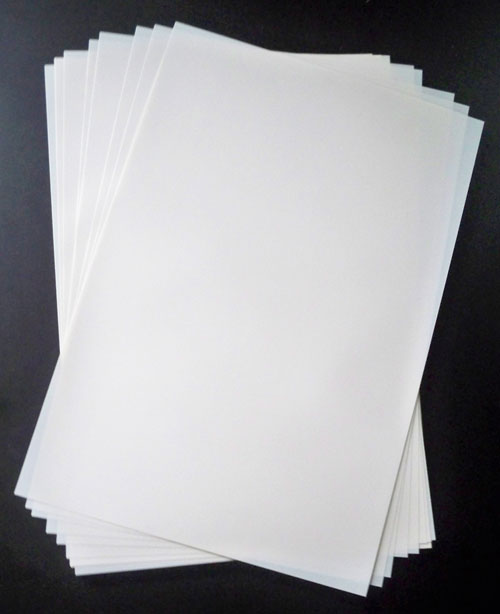
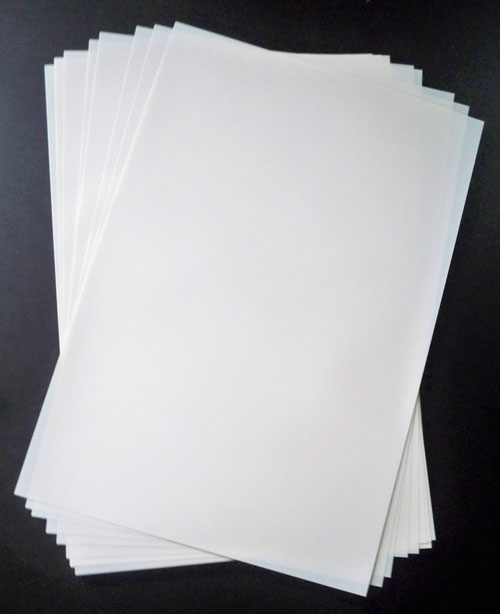
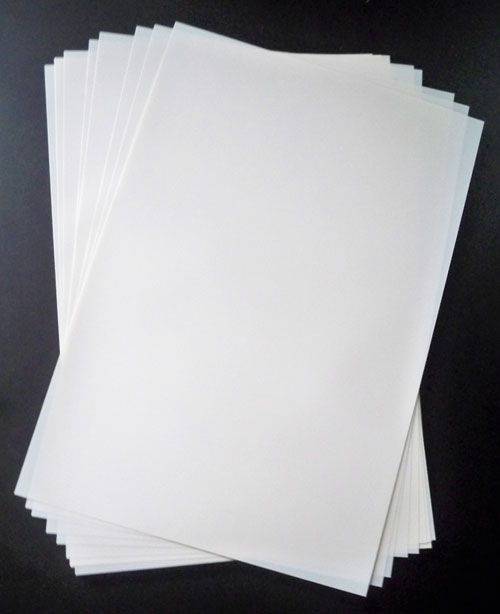
Direct Laser Imaging With No Wet Chemistry
The imaging is straightforward. As the sheet passes through your laser printer, toner fuses to the polyester surface and becomes the ink-receptive image area. Nothing else has to happen before the plate goes on press. A no-chemistry plate workflow removes the developer, the replenisher, and the processor maintenance that a conventional aluminum job carries, so there's less to clean, less to mix, and less to go wrong.
Shops still running metal know that wet chemistry is where a lot of plate problems start. Here you trade that whole stage for a single pass through a printer you already own, which is why these plates suit busy short-run shops so well.
From the Laser Printer to the Press
The plate-to-press path is simple: image the plate on your laser printer, mount it on the press, and run it with Universal Laser Plate Fountain Solution. That fountain pairing matters, because polyester needs a dampening chemistry formulated for the surface rather than a standard aluminum solution. Xante polyester plates and other desktop-imaged stock both rely on this step to keep the non-image areas clean and the image inking sharp.
Browse our fountain solutions to confirm the right match for your setup, then dial in dampening conservatively on the first sheets and bring it up until the background runs clean.
Choosing the Right Polyester Plate Size
Match the Plate to Your Press
Each polyester laser printing plate is stocked in 12 sizes spanning 8.5" x 11" up to 13" x 19-7/8", which covers the common bed sizes on Xante systems, an HP laser plate setup, and most small-format duplicators and single-color presses. Pick the size that matches your maximum image area plus gripper and bend allowance, the same way you would spec any plate. If you run more than one press, it's worth stocking two sizes so a rush job never waits on the wrong plate.
Can't find your size in the grid below? Call our team and we can usually source it. You can also compare our full range of offset plates and film if a job calls for a different plate type.
Polyester Plates Compared to Standard Aluminum Plates
The choice usually comes down to run length. For a short-run offset plate, polyester wins on setup speed and cost per plate because there's no processing and no chemistry overhead.
Aluminum earns its keep on long runs, where its durability holds image quality past the point where polyester begins to wear. Setup is faster with polyester since the plate comes off the printer ready to mount, while aluminum adds the developer and processor stage. None of this is a knock on metal.
If you also run high-volume work, our Mitsubishi polyester printing plates and aluminum offset printing plates cover the rest of the spectrum, so you can keep the right plate on hand for each run length.
What Is a Polyester Plate?
A polyester plate is an offset printing plate built on a flexible polyester base that is imaged directly by a laser printer, with fused toner forming the ink-receptive image instead of a light-exposed, chemically developed coating. The printer's fuser bonds the toner to the surface with heat, and because cured toner is hydrophobic it accepts ink while the dampened polyester carries water, the same planographic principle an aluminum plate works on.
That single difference removes the processor, the developer, and the replenisher from the workflow. Imaged at 1200 dpi on a hot-fusing laser such as a Xante or HP 5000-class printer, the plate comes off ready to mount, and toner-imaged polyester is used commercially for runs up to roughly 20,000 impressions, shorter on heavy coverage or fine screens. That makes it a natural fit for short to mid run forms and commercial work kept in-house.
Polyester Laser Plate Specifications at a Glance
Because the image is fused toner rather than a developed emulsion, a polyester plate has no chemistry to mix, monitor, or dispose of, and nothing to oxidize on the shelf. The trade-off is run length: a toner image wears faster than a baked aluminum coating, so polyester is matched to short and mid runs. Two practical levers extend plate life.
First, fusing: a hotter fuser bonds toner more durably, and running a blank pass to re-fuse the image is a common shop trick before a longer run. Second, dampening: keep ink-water balance tight with a dedicated laser-plate fountain solution, since polyester is less forgiving of over-dampening than aluminum and a flooded plate scums and breaks down early.
- Material: polyester base, imaged by fused laser toner
- Imaging: direct from a Xante or HP laser printer at 1200 dpi, no platemaker
- Chemistry: none, with no developer, processor, or replenisher
- Sizes: twelve stock sizes, 8.5" x 11" up to 13" x 19-7/8"
- Run length: short to mid run; toner-imaged polyester runs to roughly 20,000 impressions
- Dampening: pair with Universal Laser Plate Fountain Solution
- Best for: business forms, letterhead, NCR sets, short commercial jobs
Why Buy Polyester Plates From Printing Supplies Direct
Printing Supplies Direct has backed pressrooms since 2010 with thousands of repeat customers. Most orders ship same or next day, expedited overnight UPS is available when a deadline is tight, and shipping is free to the contiguous 48 states.
Every order is covered by our performance guarantee, and our team includes people who actually run presses, so technical questions get real answers. If you need help matching a plate, a fountain solution is not in stock, or you want to round out an order from our broader pressroom supplies, call us at 860-516-6393.
Key Takeaways
- A polyester plate images directly on a Xante or HP laser printer with no chemistry, developer, or processor.
- Twelve stock sizes run from 8.5" x 11" up to 13" x 19-7/8".
- Best suited to short and mid run forms, letterhead, NCR sets, and short commercial work.
- Pair with Universal Laser Plate Fountain Solution and keep ink-water balance tight on press.
Frequently Asked Questions