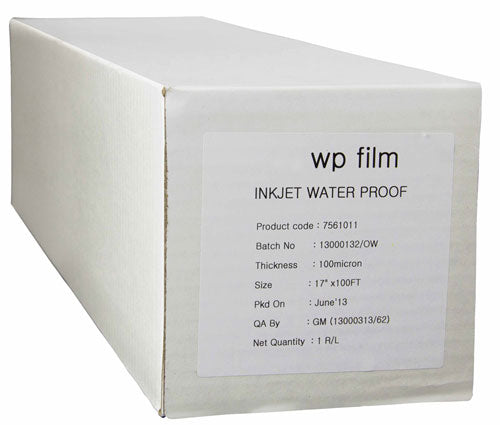
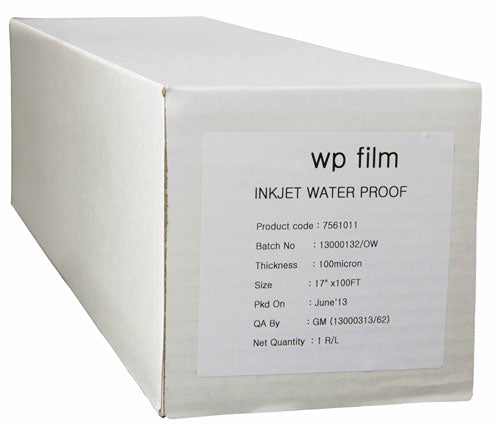
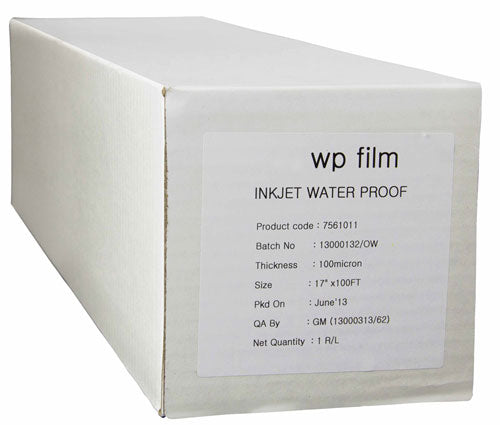
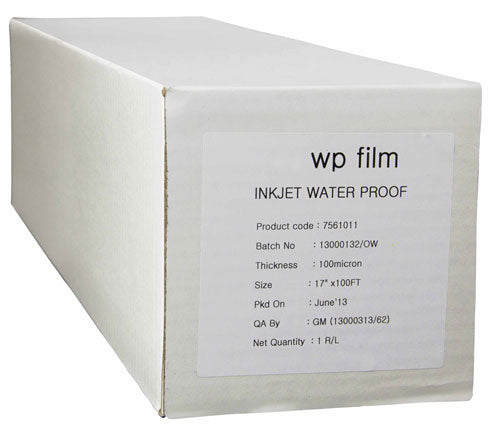
Waterproof inkjet transparency film uses a microporous coating on one side of a clear polyester substrate. When you print on the receptive side, the coating absorbs both dye and pigment inks on contact and traps them instantly. That fast absorption gives the film its quick drying time, typically 5 to 12 seconds, and strong resistance to smearing and bleeding.
The waterproof coating is the key difference between this film and standard transparency film. Regular inkjet film lacks a specialized absorbent coating, so ink sits on the surface, smears easily, and often requires multiple copies stacked together to match the opacity of a single waterproof inkjet film sheet. Waterproof film sheets achieve an optical density (OD) above 3.0, producing the dense black coverage that UV exposure units need for clean screen printing stencils. The film also requires less ink to reach the same image density compared to other films, so you'll get consistent clarity while using less ink per sheet.
Gloss Finish vs. Matte Waterproof Film
PSD stocks both gloss and matte finishes in waterproof inkjet film. The difference comes down to surface texture and how each finish handles light during UV exposure.
Gloss waterproof inkjet film has a smooth, reflective surface that produces high image clarity and sharp line definition. It's the preferred choice for screen printing positives where fine halftone precision matters, because the smooth coating retains ink with minimal dot spread. Gloss film is also commonly used for signage, label printing, and quality photo output where a clean, vivid print is the goal.
Matte film has a textured surface that reduces glare, which helps during screen setup under bright lights. For high quality screen printing stencils and silk screen positives, the gloss finish remains the more widely used option.
Screen Printing and Silk Screen Applications
Waterproof inkjet film is the standard transparency for producing screen printing positives on an inkjet printer. Print your artwork onto the film, let it dry (seconds with this waterproof coating), then place the film on your coated screen and expose under UV light. The deep black areas block UV from reaching the emulsion, creating a detailed stencil for ink transfer.
This film supports high resolution printing up to 5760 dpi, which gives you the precision needed for fine halftones, small text, and detailed vector art. Screen printers in production environments rely on that resolution because it translates directly to stencil quality and final print clarity.
Waterproof inkjet film is also suitable for PCB circuit board exposures, UV plate making, and custom signs and labels that withstand environmental conditions. If you're setting up for silk screen work, PSD carries spray adhesive for screen printing alongside the film.
Inkjet Printer Compatibility and Ink Types
This gloss waterproof inkjet film is compatible with both dye based inks and pigment inks, covering the majority of desktop and wide format inkjet printers. Epson, Canon, and HP printers all work with this film when you print on the coated receptive side.
Pigment inks produce slightly higher density blacks and better water resistance after drying, making them preferred for screen printing positives. Standard dye based inks perform well for general transparency printing and signage. Both dye and pigment inks dry quickly on the microporous waterproof coating.
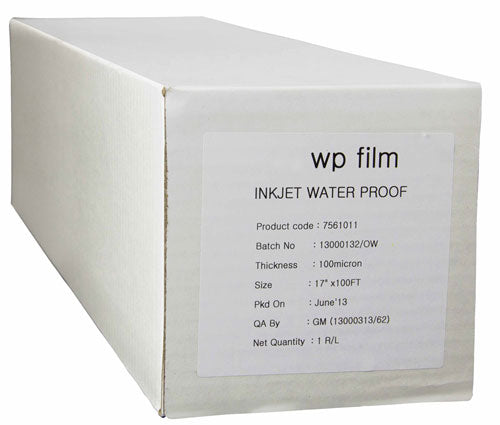
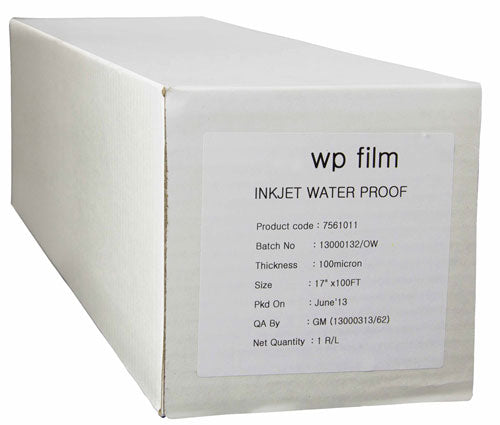
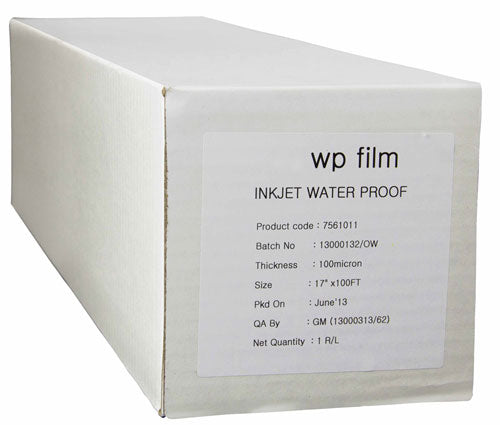
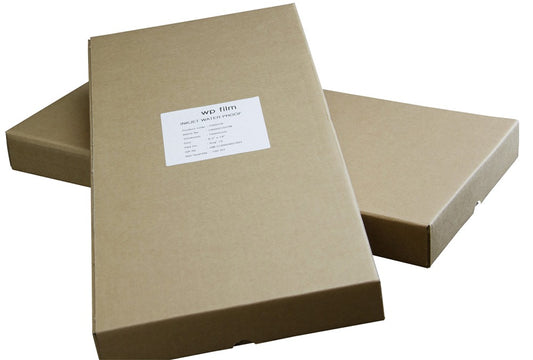
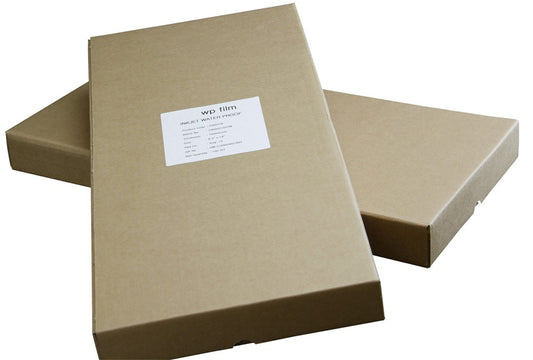
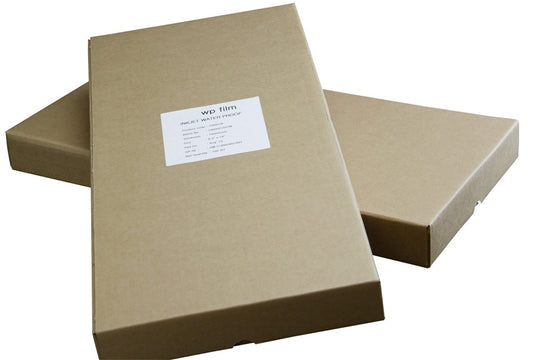
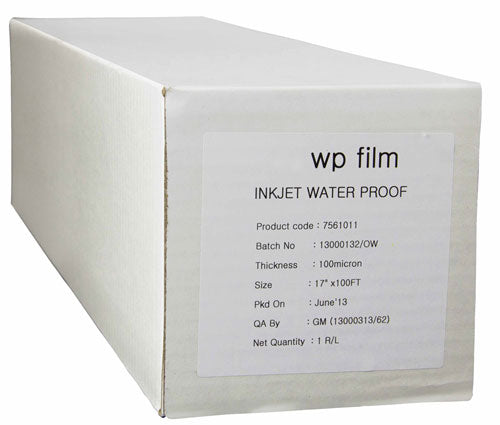
The film comes in sheets (100 sheets per pack in standard cut sizes) and rolls for wide format printers. Sheet sizes include 8.5 x 11, 8.5 x 14, 11 x 17, and 13 x 19. Roll widths range from 13 to 60 inches at 100 feet per roll, all at 5 mil film thickness. That thickness gives clean feed through most inkjet printers while keeping the film flexible enough for screen contact during UV exposure.
Waterproof Inkjet Film vs. Transparency Film and Waterproof Paper
Standard inkjet transparency film is a basic clear film without a waterproof coating. Ink sits on the surface and is prone to smearing, slow drying, and bleeding. For screen printing, you'd typically need to stack multiple copies of standard transparency to get the UV blocking density that one waterproof inkjet film sheet delivers on its own.
Tearfree waterproof paper is a different product. It's an opaque, tear resistant synthetic paper for durable documents, maps, menus, and outdoor signage. It prints well on inkjet printers and handles moisture, but it isn't transparent, so it won't work for screen printing positives. PSD stocks 12 x 18 tearfree waterproof paper and 13 x 19 tearfree waterproof paper for those jobs.
For photography and proofing paper, fine art dual sided paper, or canvas paper for printing, browse PSD's media collections. For screen printing positives and UV exposure work, waterproof inkjet film is the right material.