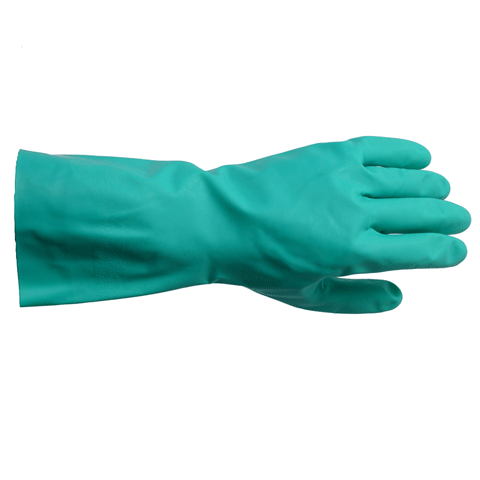
Small nitrile gloves are the practical choice for pressroom operators who need hand protection without losing the control that precise work demands. Made from 100% synthetic rubber, they provide strong resistance to the oils, solvents, and press chemicals that offset printing involves, sized for operators whose hands are too often underserved by one-size-fits-most stocking decisions. Every order ships free.
What Are Small Nitrile Gloves Commonly Used For?
In an offset pressroom, the tasks that create the most hand-contact risk are also the most routine ones. Roller changes, ink fountain adjustments, blanket washing, and solvent-based cleaning happen across every shift, and each one puts skin in direct contact with chemistry that causes real problems over time.
Offset inks are oil-based and bond to skin quickly. A single roller change without gloves means hands that need serious cleaning before they can safely touch anything else on the press. Nitrile creates a complete barrier against ink, fountain solutions, and coatings, not just reduced contact, but full protection that lets operators move between tasks without stopping to clean up between each one.
The same applies during maintenance. Press washes and roller cleaning chemicals do their job on ink and residue, but repeated skin exposure to those solvents causes cumulative dryness and irritation. Wearing nitrile during blanket washing, roller cleaning, and chemical-based maintenance protects the skin barrier without slowing anything down.
Beyond the pressroom, nitrile gloves in this size are also used across laboratory work, food preparation, automotive detailing, and any task where chemical resistance and a close fit matter more than the bulk of a heavier glove.
Choosing the Right Glove Formulation for a Pressroom
Not all disposable gloves are equal for pressroom use. The key factors are chemical resistance to oil-based inks and solvents, a fit that preserves tactile feedback for fine press work, and a formulation that does not introduce contaminants onto the surfaces gloves come into contact with.
Nitrile meets all three requirements in a way that latex and vinyl do not. It holds up against the chemistry involved in offset printing, it conforms closely enough to the hand to maintain control during precise tasks, and its synthetic construction avoids the latex sensitivity risk that affects some operators.
What Size Are Small Nitrile Gloves?
Small nitrile gloves are designed for hand circumferences of approximately 7 to 8 inches (17 to 20 cm), measured around the widest part of the palm just below the knuckles. Most sizing charts align on this range for small, though there can be minor variation between manufacturers, so if you are borderline it is worth measuring before ordering.
If you fall between sizes, going slightly smaller gives better tactile feedback than going larger. A snug glove moves with the hand; a loose one works against it. For operators whose hands are on the smaller end of even the small range, extra small is the better starting point and Printing Supplies Direct stocks that size too.
Should Nitrile Gloves Be Tight or Loose?
Snug, not tight, and definitely not loose. A glove that is too loose bunches at the fingertips, reduces tactile feedback significantly, and increases the risk of catching on tools or equipment mid-task. In a pressroom where you are adjusting rollers, handling plates, or working around press components, fighting a loose glove is a real problem, not just an inconvenience.
A glove that is too tight is its own issue. Tightness across the palm and fingers restricts movement, causes hand fatigue faster during extended tasks, and puts tension on the nitrile that makes it more likely to tear under stress. Neither extreme is acceptable when a glove needs to stay intact and functional across a full maintenance task.
The right fit sits smoothly across the palm, conforms naturally to finger movement, and stays in place without readjustment. If you find yourself pulling gloves back up or repositioning bunched fingertips during a task, the size is wrong.
What Is Better Than Nitrile Gloves?
For most pressroom tasks, nothing in the disposable glove category outperforms nitrile. It offers the best balance of chemical resistance, dexterity, and latex-free construction for day-to-day offset printing work. That said, "better" depends on the specific task.
For heavy or prolonged exposure to strong acids, caustic chemicals, or ketone-based solvents, a thicker reusable glove made from neoprene or butyl rubber provides superior chemical resistance. These materials hold up against chemistry that will degrade standard nitrile over time. The tradeoff is dexterity; a heavier chemical-resistant glove is considerably bulkier and is not suited to the fine press work that disposable nitrile handles well.
For tasks requiring cut or puncture resistance, such as handling sharp metal press components, a cut-resistant liner glove is the better choice regardless of material. Nitrile provides no meaningful protection against sharp edges.
In short, nitrile is the right default for pressroom use, and a heavier specialist glove is the better choice only when the specific chemical or physical hazard exceeds what nitrile is rated for.
What Are the Disadvantages of Nitrile Gloves?
Nitrile is the correct specification for pressroom use, but understanding its limitations helps operators use it properly rather than rely on it beyond what it can do.
Standard disposable nitrile is single-use. It is not designed for reuse after heavy contamination, and attempting to wash and reuse a glove that has been exposed to inks and solvents gives a false sense of protection. Once the exterior is contaminated, the glove should come off.
Nitrile provides no thermal protection. It will not protect hands near heated press components, drying systems, or hot surfaces. It also offers limited resistance to cuts and punctures compared to heavier-duty gloves, which matters on press work involving sharp metal edges or components.
For certain aggressive chemicals, including strong acids, caustics, and ketones, standard disposable nitrile may not provide sufficient barrier protection over extended contact. Always check chemical compatibility for any substance outside the typical ink, fountain solution, and press wash range.
None of these limitations affect normal offset pressroom use, but they are worth knowing so operators reach for a more appropriate glove when the task calls for it.
Where Can I Buy Small Nitrile Gloves Online?
Printing Supplies Direct stocks small nitrile gloves online, stocked specifically for print environments and available with free shipping on every order. You can order a sample pair to confirm fit before committing to larger quantities. The full press gloves range is available on the site alongside the rest of your pressroom consumables, so you can consolidate press washes, hand cleaners, cotton wipes, and gloves into a single shipment.
Technical support is available if you have questions about specification or chemical compatibility before ordering.
Part of a Broader Contamination Control Approach
Nitrile gloves work best alongside the other consumables that manage contamination across a shift. Cotton wipes and shop cloths handle surface cleanup on blankets and rollers during press runs; gloves protect hands while the wipes handle the surfaces. Hand cleaners handle any residue that reached skin through tears or contact at the cuff. Used together, all three reduce the total contamination moving around the pressroom.
For everything a pressroom needs for daily operation and maintenance, the full pressroom supplies range covers press washes, roller cleaners, spray powders, and cleaning cloths, all with free shipping and technical support.
Order with Confidence
Every order at Printing Supplies Direct ships free. Add small nitrile gloves to your regular order alongside hand cleaners, cotton wipes, and press washes and get everything in a single shipment. Technical support is available if you need help confirming the right specification for your pressroom.