


Printing Supplies Direct
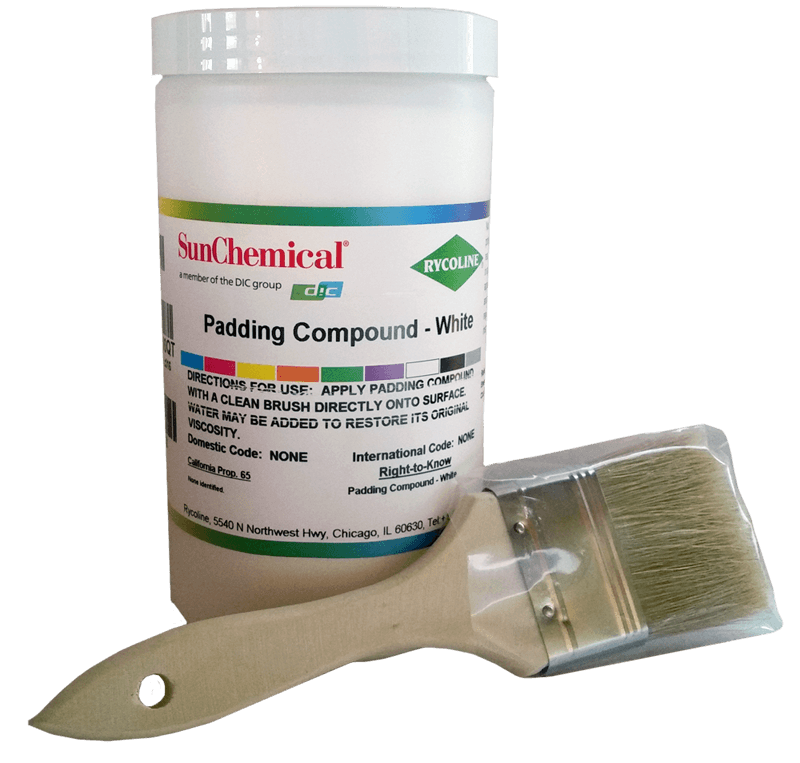
ABDICK Padding Glue Compound 1 Qt
ABDICK Padding Glue Compound 1 Qt
SKU:PSDABDICK-QT

Free Shipping
on ALL cases

Made in
the USA

Performance
Guaranteed


Description
Description
This padding glue is a specialized, water-based adhesive built for one job: binding stacked sheets into peel-away notepads, forms, and books with a flexible bond that holds firmly yet allows clean, single-page separation. The ABDICK/Rycoline White Padding Compound comes in a 1-quart jar, which is the right size for shops running steady notepad and form production without committing to a full gallon. It dries fast, stays flexible, and resists cracking, so finished pads stay together firmly while still releasing pages cleanly without tearing or damage.
Features and Benefits
The formula dries quickly enough to keep a production run moving. You can apply it by brush in thin to medium coats, and it levels smoothly across the pad edge without pooling or running. Once dry, the padding compound forms a flexible, rubbery bond that won't chip, flake, or crack, even on pads that get heavy daily use, though proper results still depend on waiting between coats as needed.
Viscosity is adjustable with water, which is helpful when you're working with different paper stocks or coat weights. Thinner stock may call for a slightly thinner mix to avoid bleed-through, while heavier card stock can take a thicker application. Poly padding brushes are included with this product, so you won't need to source applicators separately.
This white version of padding glue contains zero VOCs and is made in the USA. It's also available in White, Red, Black, Blue, Green, and Orange. It's a water-soluble adhesive, so cleanup is straightforward with just water before the product sets.
Product Specifications
Size: 1 quart (32 oz). Color: white. VOC content: zero. Includes padding brushes. Made in the USA. Viscosity is adjustable with water.
If your shop goes through padding compound in higher volume, the same formula is available as a padding compound in 1-gallon containers. For a different brand option in the same quart size, the HAR Padding Compound (1 quart) is also carried in our padding glue and compounds collection.
What Padding Glue Is Used For
Padding glue is the standard adhesive for commercial print finishing and DIY pad-making alike. Its primary use is binding loose, stacked sheets along one edge so each page separates cleanly. Common applications include custom notepads, receipt books, coupon books, small manuals, and multi-part carbonless forms. If you're producing pads from carbonless paper, you'll want a fan-apart formula specifically designed for NCR stock, since standard padding adhesive can bond carbonless sheets too tightly for clean separation.
Beyond notepad production, this adhesive is suitable for light bookbinding and book repair where a flexible spine bond is needed. The rubbery, pliable finish keeps pages together without the rigid set of standard PVA glue, which dries harder and more brittle by comparison. That flexibility is what allows each page to tear away cleanly at the pad edge.
How to Use This Padding Compound
Start by jogging your sheets into an even stack and aligning the edge you plan to pad. Place a sheet of chipboard or heavy card stock at the back of the stack to serve as the pad's backing. For a simple DIY pad, you can use 12 sheets of paper for 48 pages when you cut 8½” x 11” paper into four pieces. Clamp the stack firmly with binder clips, a padding press, or a shop vise so the binding edge is exposed and the sheets stay aligned during application.
Brush a thin, even coat of padding glue across the exposed edge. Make sure the adhesive covers the full surface from side to side and top to bottom. Let the first coat dry, waiting the usual 20 to 30 minutes at room temperature before the next coat, then apply a second coat. For most standard-weight paper, two coats deliver a reliable bond. Thicker pads or heavier stock may benefit from a third coat. Apply three coats of padding compound when working with slick or coated stock to ensure the bond reaches every page. Allow the final coat to dry for about one hour before handling.
Once the adhesive has fully set, use a padding knife to separate the individual pads from the stack. If you're running multiple pad sizes from a single large stack, an adjustable pad counter can speed up the process by letting you count out a consistent number of sheets per pad. A 14-inch padding press works well for smaller format jobs and lighter production volumes. Homemade padding compound can be reused by reheating, but this product is ready to use from the jar.
Padding Glue vs. Regular Glue
Standard white glue (PVA) and padding glue are both water-based adhesives, but they're formulated for different results. PVA glue dries to a hard, rigid bond. That's fine for woodworking or permanent paper lamination, but it makes page separation difficult and often rips the paper itself. Padding adhesive, by contrast, dries into a flexible, rubbery layer that keeps pages bound firmly yet allows each sheet to peel away individually at the binding edge.
Rubber cement is sometimes used as a substitute, but it doesn't hold up under repeated use and tends to yellow over time. For consistent, professional-quality pads, a dedicated padding compound is the right product for the job.
