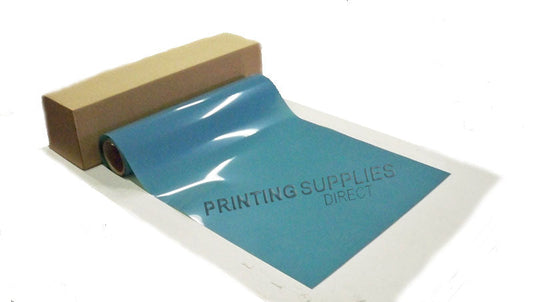
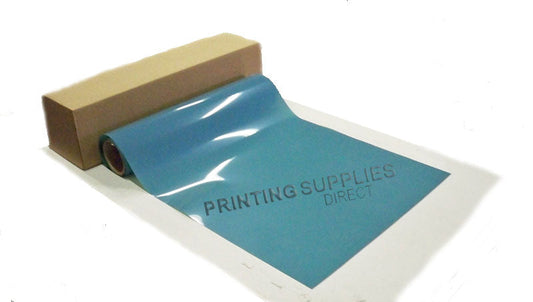
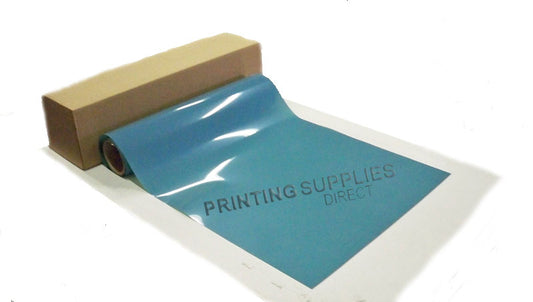
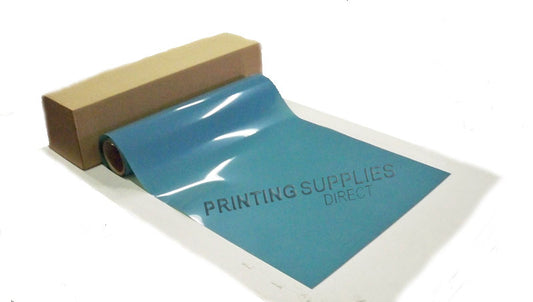
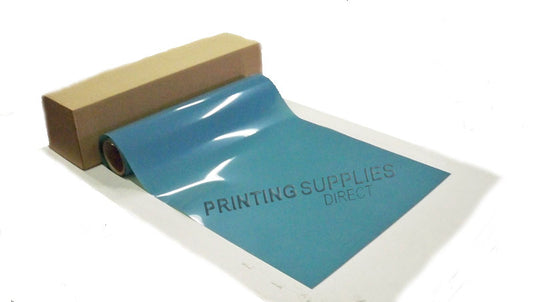
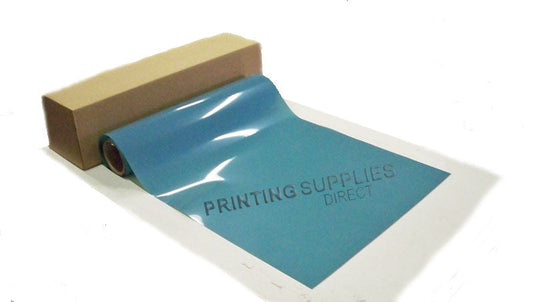
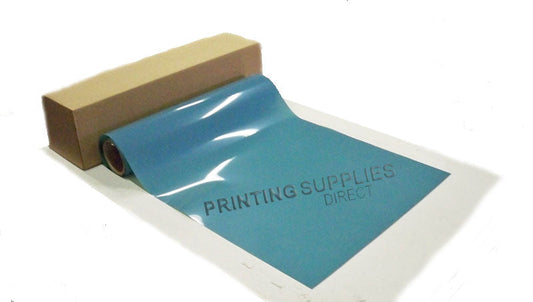
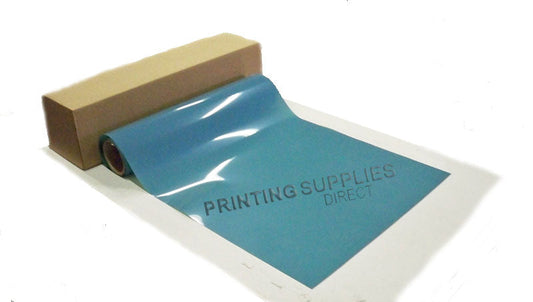
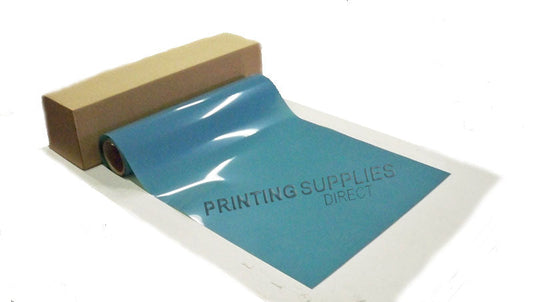
Imagesetter film is silver‑halide polyester film engineered to be exposed by a laser inside an imagesetter. After exposure, it's processed in RA (rapid access) chemistry to produce ultra‑sharp, opaque positives or negatives for workflows like screen printing, letterpress, pad printing, hot stamp, and legacy offset/letterpress plate exposure.
You still need imagesetter film when:
- You require very high density and opacity. True recorder film routinely achieves Dmax 4.0+ with clean, low Dmin, which translates to crisp UV blocking and clean washouts on thick emulsions and long exposures.
- Your art demands precise screening. Stochastic dots, fine linework, microtype, and LPI north of 150 hold better on laser‑exposed film than most desktop inkjet workflows.
- You need dead‑on registration and repeatability. Polyester base with tight dimensional stability (and calibrated processors) gives you less drift across long runs.
- Your client or process is validated on film. Some regulated or color‑critical accounts still spec imagesetter film for consistency and documentation.
In short: if density, dot integrity, and repeatable geometry are mission‑critical, imagesetter film pays for itself in fewer remakes.
Specs That Affect Print Quality
Resolution And Screening
Most imagesetters run between 1200–4000 dpi, supporting 65–200 LPI with conventional AM screening and ultra-fine FM/stochastic dots when paired with a precise RIP. If you print detailed linework, logos, or small type, favor films rated at 2400+ dpi like SPEC-829 HN/RLD Imagesetter Film (457mm x 60m), which ensures crisp edges and clean corners at professional resolutions.
Tips:
- Use a RIP with precise dot gain curves for your process (screen printing mesh, emulsion thickness, press conditions).
- For stochastic, validate minimum dot size that survives both exposure and washout, often 20–35 microns depending on mesh.
Density (Dmax/Dmin) And Opacity
For demanding UV exposures or long-run plates, aim for Dmax 4.0+ and Dmin 0.05–0.10 to achieve dense blacks and crystal-clear base transparency. Options like the 914mm x 45m SPEC-829 Film maintain this level of contrast and blocking power even in high-throughput operations.
Remember: transmission density, not reflection, is what determines exposure accuracy. If your Dmin rises or film looks milky, your chemistry may be fogged or exhausted.
Base Thickness, Dimensional Stability, And Curl
A standard polyester base of 0.004" (100 microns) provides the best balance of rigidity and flexibility. For heavy production or frequent handling, a slightly thicker film like the 762mm x 60m SPEC-829 Imagesetter Film offers added stability and reduced curl. Always store film flat and allow rolls to acclimate before loading to minimize dimensional shift and static buildup.
Roll Widths, Lengths, And Core Size
Common widths align to device families, e.g., 12", 13", 14", 18.5", 20", 24", 25", 30", 36". Lengths often range from ~100 ft to 300+ ft per roll. Cores are typically 2" or 3". Ordering the wrong core or width is a fast way to lose a day, so match your machine's spec sheet exactly. If you're unsure, measure the existing core and leader, and note the emulsion orientation (in or out).
Imagesetter Film: Frequently Asked Questions